Are you looking for trucking companies hiring CDL drivers in Texas? Review information profiles for each trucking company or apply to all and find a match for your qualifications. Fill out a safe and secure, online application to submit your interest, and work for the best trucking companies in Texas.
Are you looking for trucking companies hiring CDL drivers in Texas? Review information profiles for each trucking company or apply to all and find a match for your qualifications. Fill out a safe and secure, online application to submit your interest, and work for the best trucking companies in Texas.
Salary Data for Truck Driving Jobs in Texas
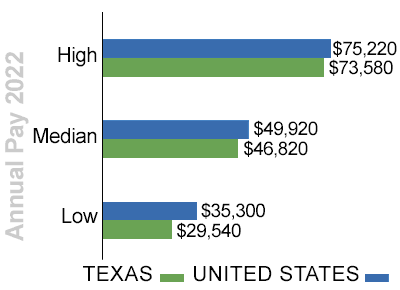
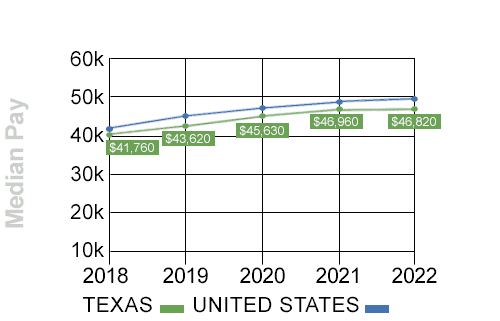
The low pay for CDL drivers in Texas stands at $29,540, with drivers in the top 10 percent earning over $73,500, according to reports compiled by the Bureau of Labor Statistics for 2022 wages. The wage levels for trucking jobs in Texas fall closely in line with driver earnings reported across the United States.
Job Outlook for Truck Driving Jobs in Texas
The Lone Star state ranks first in the nation for the number of residents employed as truck drivers. Given the massive size of Texas, it is not surprising that the state boasts a robust trucking industry.
For drivers looking for trucking jobs in Texas, there is great news ahead. Studies show nationwide growth for trucking driving jobs of 4 percent through 2031. However, the strong Texas economy is expected to dictate a need for over 29,000 new truck driver jobs annually, far surpassing U.S. growth.
Find your next trucking job today! Take a look at the abundance of Texas truck driving jobs and find yourself in the driver's seat.
FIND DRIVER JOBS NEAR YOU:
Trucking jobs near Austin, TX
Trucking jobs near El Paso, TX
Trucking jobs near Dallas, TX
Trucking jobs near Houston, TX
Trucking jobs near San Antonio, TX
AW Transport is an independent, family-owned and operated trucking company hiring company drivers for high paying truck driving jobs in several locations.
Contract Freighters, Inc. (CFI) is now hiring experienced class-A CDL truck drivers to drive over the road routes with great opportunities to grow.
CRST is hiring for all positions in all locations with a wide variety of high paying truck driving jobs for new and experienced CDL drivers.
Dart Transit has jobs for Owner Operators, Company Drivers, OTR, Regional, Dedicated and Recent grads offering new pay packages for every division.
Double J Transport is now hiring for Over the Road Class A CDL Company Truck Drivers. Honesty takes a front seat at Double J Transport.
Grammer Logistics is hiring experienced class-A CDL drivers for regional tanker trucking jobs with weekly home time, plus great pay and benefits.
Gray Transportation is hiring experienced class A CDL drivers for regional and OTR driving jobs. Enjoy great pay and benefits. Apply here!
Highboost Corporation is now hiring over-the-road drivers with a class-A CDL who are looking for high miles and great pay!
Local truck driving jobs with hourly pay and daily home time with a leader in new trucking ventures.
J-Mar Enterprises, a family owned trucking company that treats our Drivers as "One Of The Family" is looking for Over The Road Drivers.
Koch Trucking company is hiring drivers with various experience levels, including owner operators, local driving jobs, over-the-road and more.
Melton Truck Lines offers drivers top pay & benefits, free on-site clinics & dentists, performance & referral bonuses, rider-pet programs, and more.
Unlike other national trucking companies, drivers at National Carriers are known by their name and get the support they deserve.
Panther's exclusive lease purchase program gets you on the road and earning the pay you deserve. Find trucking jobs today!
Paschall Truck Lines is a 100% employee-owned trucking company and has the highest-paid training in the trucking industry.
Local and truckload truck driving jobs with great home time and pay including overtime for any work over 40 hours per week at Pinnacle Freight.
Western regional truck driving jobs with Quality Logistics Inc. offer significant company benefits while working for a small trucking company with family values.
RCL Track Services is now hiring class-A and class-B drivers for private fleet drivers offering great pay and home time!
Roehl Transport offers pay based on performance & industry leading home time schedules with terminals around the country. Browse Roehl Jobs today.
Schneider offers more trucking jobs than any other freight hauler. Learn more and apply for a career with a leader in the transportation industry!
The highest paying truck driving jobs in the Eastern United States can be found at Specialized Transport Solutions.
Local truck driving jobs are available with SRS Distribution | Heritage Family of Companies. The fastest-growing private company growing in the industry of building products, landscape and pool & spa products is seeking drivers for every level of the organization.
TP Trucking is adding Company Drivers to their over-the-road flatbed driving fleet and offering great pay and benefits with a great trucking company.
Some of the best truck driving jobs are USPS transportation jobs and they are hiring professional CDL drivers across the nation right now.