
Industry News & Tips for Truckers
- Details
- Written by: Kate Williams
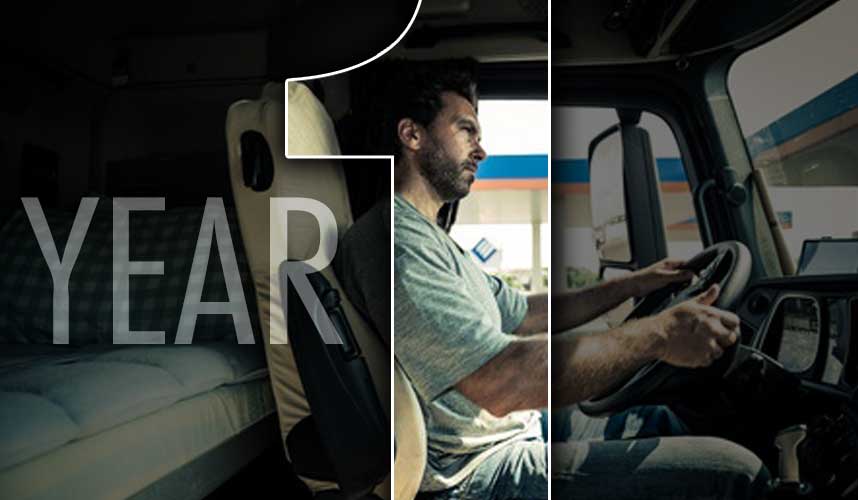
A career as a truck driver can be extremely rewarding. However, settling into your new job can take some time, and you might hit some rough patches during your first year. Here are some tips to prepare you for the challenges ahead.
Prepare Your Budget
Truck driving can be a lucrative job, but when you first start out, you will make less money than your peers. This is especially true if you enroll in a company-sponsored commercial driver's license (CDL) training program. These programs are often completed in a relatively short period of time so you may get on the road quickly. if the training is paid, the pay is often minimal. Usually, however, the training isn't paid; you will pay for it via deductions from your paycheck for the first year or two that you are working for the company.
According to the Bureau of Labor Statistics, truck drivers earn an average of just over $40,000 per year. However, many trucking companies advertise higher rates of pay for experienced drivers. After a few years, you may be able to make more than $80,000 per year.
If it is at all possible, it is a good idea to have some money in your savings account so you can maintain your lifestyle while your new trucking career gets underway.
Accept the Learning Curve
 When you first start your new job, you'll likely be paired with a driver trainer. Some trainers are easygoing and not a problem to get along with — but others aren't so personable. If you find it challenging to get along with your trainer, have patience. You won't have to work so closely with this person forever, and getting through the personality conflicts will be worth it in the end.
Also, set realistic expectations and accept that you will make mistakes during your first year. Other drivers might get frustrated with you if you take too long to back into a space, you might have a tough time dealing with certain clients, or you could encounter any number of other issues. Be humble and willing to learn. Even truck drivers who have been driving over the road for years make occasional missteps.
What to Expect at Your First Trucking Job
Expect to Adjust Your Lifestyle
Trucking is like no other career. While many jobs demand consistent training and long hours, few jobs will force you to be away from home for weeks at a time. You will have to adjust your lifestyle to fit the demands of the career. Unless you’ve been in the military, you’ve probably never been away from home for so long and so often. Be prepared to make the necessary changes so you can live a rewarding life as a trucker.
Expect to Get Less Favorable Assignments
You may have passed through CDL school at the top of your class, but you still need to prove yourself in the “real world.” If you are on your first trucking job, you can expect to be assigned the less desired assignments, at least for a short while. Don’t take it personally. You’re new, untested, and still learning. Be patient and take every assignment with enthusiasm and it won’t be long until you are getting the more lucrative and enjoyable routes.
Expect to Miss Your Loved Ones
It’s sad, but it needs to be said. You can expect to miss your loved ones while you’re on the road. It doesn’t mean you’re not cut out to be a trucker, it simply means you’re human. Remember to keep in close contact with your kids, spouse, and parents while you’re on the road and you’ll be able to get home in no time. Stay motivated and remember that your loved ones are the reason you work so hard.
Expect to Get Lost
It happens to everyone, and it will happen to you. When you get lost, pull over, relax, and look at your directions. Find out where you are and where you need to be and you’ll be back on your route in no time. Avoid Google maps and car-based GPS systems, as these can lead you down roads that are inaccessible for semi trucks. One of the best practices is to simply call the place you’re headed, as they can give you accurate directions to your destination. Don’t be embarrassed, they likely take these calls all the time.
Expect to See Things That You Never Thought Existed
The scenery might be the reason you got into trucking in the first place. Expect to see parts of the country that you have never seen before, including areas that you never knew existed. Did you know that the National Freshwater Fishing Hall of Fame sits inside a 143-foot long fish statue? Did you know that there is a town in Wyoming with a listed population of two people? You’ll discover little facts like these every day when you live the interesting life of a trucker!
Adjust to the New Schedule
One of the biggest challenges for new truck drivers is the grueling schedule, especially if you want to be an over-the-road (OTR) driver. Mike Rogers, an experienced former driver and CDL instructor, says, "This is more of a lifestyle with a paycheck than it is a job with a paycheck. This is especially true for OTR and long-haul drivers who are away from home for extended periods of time and working close to 70 hours per week."
If you have a family, make sure they understand your new schedule. Setting up ways to stay in touch if you'll be gone for long periods of time will help to stay connected..
Prepare To Be Tested
During your first year, you'll likely learn about all the tough aspects of trucking. Your employer might intentionally test you by sending you to deal with tough customers or assigning you to go to regions where the roads are difficult to drive on. You might get stuck with undesirable loads. More experienced drivers might have the power to say no to these challenging situations, but newbies often don't have that luxury.
The goal of this testing is to see what you're made of. Part of the reason turnover is so high in the trucking industry is because a lot of people don't stick around to make it through the testing. Hang in there. Things will get easier as you gain more experience.
Embarking on your career as a truck driver will be a challenge, but the rewards are worth it. With some mental toughness, reasonable expectations, and a prepared budget, you can make it through your first year in trucking with flying colors.

- Details
- Written by: Kate Williams
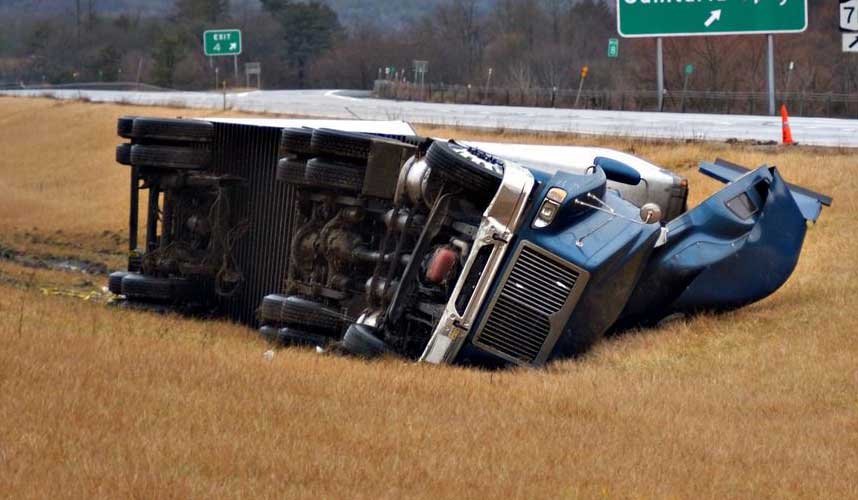
Self-driving vehicles are the next big thing in the automotive world, and technological advances are getting us closer to that reality every day. While we often picture this new technology in a passenger car, our first self-driving vehicles might actually be trucks. Yet this raises an important new question; who's liable in an accident with a self-driving vehicle?
First Commercial Delivery Using Self-Driving Truck
In October 2016, Anheuser-Busch and Uber Technologies teamed up to send a tractor-trailer stocked with beer 120 miles down I-25 in Colorado. While this type of delivery normally isn't anything groundbreaking, the fact that there wasn't a driver behind the wheel made this venture the first commercial delivery using a self-driving truck and a giant step forward in self-driving technology. Although the autonomous drive only occurred on the interstate and the driver was in the sleeper cabin to supervise the truck, Uber says the test run shows self-driving trucks are possible.
A Self-Driving Car's First Accident
In February 2016, one of Google's self-driving vehicles moved into the center lane to avoid a pile of sandbags around a storm drain and collided with the side of a bus. In the accident account, the test driver reports seeing the bus but thinking it would slow down to let the vehicle in.
This is the first time a self-driving car was in a crash that wasn't caused by human error from other drivers. It wasn't a serious incident, but it raises a complicated question; when you have a computer behind the wheel instead of a human, who takes responsibility for a collision? Is it the car owner, the car manufacturer, or perhaps even the car itself?
Who's Responsible in an Accident?
Policy experts point out that this changing technology means we need to rethink our laws on liability. Perhaps the trucking industry could turn to the car industry to help answer these liability questions. In 2015, Volvo said it would pay for any damage or injuries caused by its self-driving system, set to debut in 2020.
The idea is that the car manufacturer's self-driving technology is vastly better at predicting and avoiding crashes than a human, so there's little to no risk to cover the liability. In fact, a study done by the Insurance Institute for Highway Safety (IIHS) shows that vehicles with an automatic braking system reduce rear-end collisions by around 40 percent.
Robots as People
Another competing argument is that we need to rethink how we look at robots. Lawyer John Frank Weaver says we should consider robots as people, and therefore as insurable entities. As an example, Weaver offers a scenario where a self-driving car swerves to avoid hitting a deer, yet hits another car. He argues the car is at fault and should be responsible for damages. He also says that if we're going to have robots take over tasks that are normally assigned to people, we need to start recognizing them as people so that they take on liability.

Accepting Changing Technologies
Along with changing liability laws, there's one other large hurdle self-driving vehicles have to get over: skeptical buyers. A recent study done by AAA reports that 75 percent of U.S. drivers say they're afraid to get behind the wheel a self-driving car. Yet Navistar vice president of marketing Stephen Gilligan points out that people never trust new technology at first. He says when anti-lock brakes first came out, people didn't think you could "just slam the brakes down and the system would do a better job of stopping you," but now, "people are comfortable with that technology."
Like other advancements in technology, these changing times require us to look at our liability laws and decide if adjustments are in order.

- Details
- Written by: Kate Williams

Long haul trucking requires time away from family all year-round, but the challenges of truck driving jobs are more pronounced around the holidays. Don't let seasonal worries drag you down or distract you on the road. Stay focused, plan ahead, and make the most of the holidays no matter where you're spending them.
Keep in Touch Creatively
One of the biggest challenges of driving truck over the holidays is the time away from friends and family. You may miss some traditional celebrations due to overtime offerings that are too good to pass up. Find creative ways to keep in touch when you're on the road. Maintaining that connection with your family and establishing a healthy work-life balance is critical for your mental health.
Consider writing small holiday notes for your kids and stuffing them in an advent calendar, so they have a message from you every day of the month, even when you're not there. Skype and Facetime make it possible to both see and hear your family members as you're resting between certain legs of the journey. You can pick up holiday postcards from the various cities you pass through to give your family a little excitement when they check the mailbox. Find ways to make your travel fun for everyone.

Prepare for the Weather
The holidays can bring the onset of ice and snow in certain locales. If you're in a part of the country where this is a concern, make sure you're prepared for the complications of long haul trucking in winter weather. Conduct a thorough inspection before you head out, including tire pressure, fluids, and windshield wipers. Make sure you're using the right oil for the season.
Keep an emergency kit of essentials with you at all times. This should include a blanket, bottled water, food, flashlight, battery-powered radio, first-aid kit, chains, flares, and jumper cables. If you're traveling from a warm climate to a cold one, make sure you take a jacket, boots, gloves, scarf, and hat, even though you may not need them when you leave.
Map Alternate Routes
 Holiday drivers often get diverted from their intended route due to weather or accidents. Some cities also close off roads or change their routing to redirect the masses of holiday shoppers in certain areas and avoid congestion. Be prepared for some unexpected changes and map alternate routes.
Keep Your Mind Focused
It's easy to get distracted with long lists of holiday to-dos, but this is one of the worst things you can do while you're driving over the holidays. As the weather worsens and roads become congested with holiday shoppers, even an average trip will become more difficult. Make sure you can keep your head in the game by starting your holiday planning early.
When planning for next year, take care of gifts months ahead of time so that you don't have to fret over a last-minute trip. Ask family and friends to lay out their Christmas plans by the beginning of December at the latest so you can mark your calendar, make the necessary arrangements, and stay focused on what's in front of you while you're on the road.
Maintain Your Distance
Even if you're a whiz at winter driving, it's important to remember that other drivers on the road probably are not. Those you're sharing the highway with are often unfamiliar with winter weather conditions, distracted with thoughts of holiday stressors, or lost trying to find a new destination. Keep a little extra distance and watch for dangerous drivers around you.
Time is what you make of it
Though you may miss a few days with your family while you're driving during the holiday season, you can still find ways to enjoy the celebration of time with those you love. Remember that there is no "right" way to celebrate any given event. Eliminate any self-imposed stress of trying to create the perfect holiday setting and make the most of whatever time you can carve out. Reschedule your celebrations, keep in touch from the road, and do what you can to contribute to the fun and festivity.

- Details
- Written by: Kate Williams
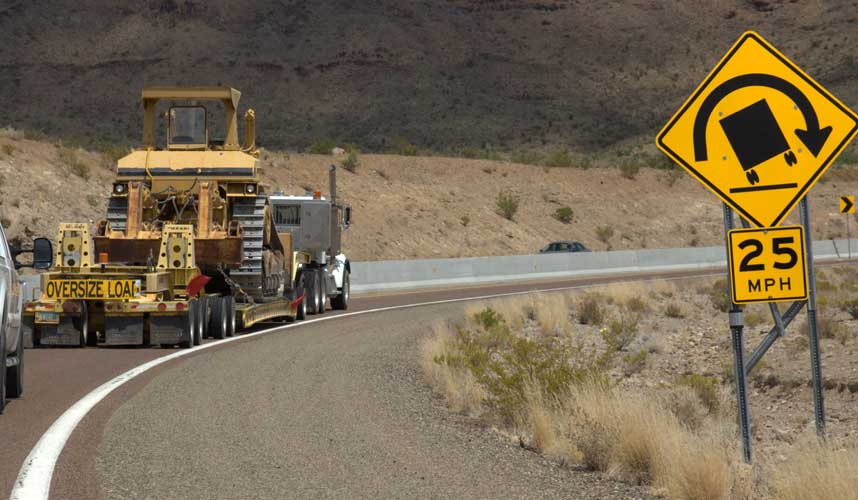
Oversized loads present a unique challenge for truck drivers. While they're more difficult to handle than standard loads, they also have several perks that make the job worthwhile. If you're looking for a way to add a challenging twist to your trip or make more money on the next haul, taking an oversized load can offer everything you're after.
What Is an Oversized Load?
There are many different types of oversized loads. This term refers very generally to any load that's larger than the standard regulations. In general, oversized loads in the United States are those that are wider than 8 feet 6 inches and cannot be broken down into smaller segments. Though the specifics vary by state, most consider anything taller than 13 feet 6 inches oversized. If the load weighs 250,000 pounds or more, it's a super load.
Oversized loads generally consist of large items that are already constructed and therefore cannot be split into separate loads. However, there are a few states that permit oversized loads of items that are divisible. Some common examples of items that would be considered an oversized load include pre-built mobile homes, windmill propellers, multi-stage rockets, bridge beams, and industrial equipment.
Understanding Varied Regulations
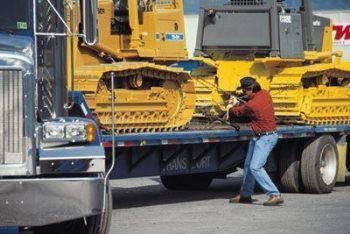 Oversize load permits are not issued by the federal government. Permits are handled by each state and regulations may vary when crossing a state line. If you're operating out of a single state, you can get to know your local rules and adhere to them easily. However, if you're hauling oversize freight across state lines, the regulations can get tricky. For example, Alabama allows an overhang of 4' in the front, while Florida permits only 3'. Alabama permits just 66,000 pounds on tridem axles while Florida allows up to 69,000 pounds.
This represents only a small handful of the differences you'll find among state regulations. If you're hauling oversized loads, it's crucial that you familiarize yourself with all the rules and regulations for every state that you'll pass through, to make sure you're operating appropriately and carry the right permits.
Handling Specified Routes
Oversized loads can only travel on particular routes. The size of your load will determine where you can take it. As the truck driver responsible for this load, you'll need to map out your route carefully to make sure you're staying on highways that can handle the size of your trailer. Your route must include accessible gas stations and rest stops.
As you're planning the trip, you'll need to consider the added time your extended route may take and plan your driving accordingly to make sure you arrive on schedule. The hours-of-service rules that apply to standard truck driving are suspended until 2017 for oversized loads. This is because it's considered dangerous to leave oversized loads untended for too long. If you're driving an oversized load, you're exempt from the 30-minute break rule.
Enjoying the Perks of Oversized Loads
Driving an oversized load is more challenging than standard truck driving because of the added size and weight that you're hauling behind you. Drivers pulling flatbed trailers must be skilled in cargo securement. However, there are some distinctive perks to this job. You'll generally make more for an oversized load, so the added challenge is appropriately compensated. You can also typically get an escort for these loads, which may ease some of the strain and even make for a more interesting trip. Pole cars and police cars can be hired to travel with you for certain loads, and are often a requirement in particular areas.
Keep these important points in mind as you're planning a trip with an oversized load to make sure you're properly prepared. With the right planning, you can enjoy many lucrative travels with this type of cargo.
- Details
- Written by: Kate Williams
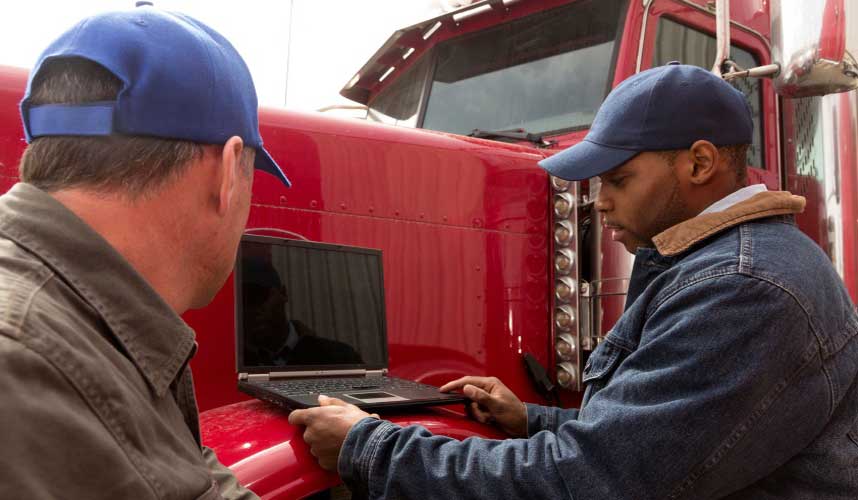
An electronic logging device (ELD) is a piece of mechanical equipment that records driving time for commercial motor vehicles. It is connected to the vehicle to capture data on its engine function, location, speed, miles driven, and more. The Hours of Service data is then transferred to a safety official. Under the ELD mandate, the Federal Motor Carrier Safety Administration (FMCSA) requires that most commercial vehicles have an ELD.
So why are ELDs so important in the trucking industry?
The Federal Motor Carrier Safety Administration (FMCSA) released a rule that requires trucks to use ELDs in December 2015 with December 2017 set as the deadline for truckers to comply.
What exactly is the ELD Mandate, and why does it have so many professional truckers up in arms?
The ELD Mandate — What Is It?
The ELD mandate requires that trucks use a DOT-approved device that is hardwired to the vehicle's engine in order to log a driver's Record of Duty Status (RODS). This can ensure that drivers are complying with Hours of Service (HOS) requirements.
The rule will apply to almost everyone in the trucking industry, with a few exceptions. Drivers will be allowed to use a paper log for as many as eight days during a 30-day period. Also, anyone operating a commercial vehicle that was manufactured before 2000, as well as driveaway-towaway drivers, will not be required to use ELDs.
The mandate received mixed reactions from those in the trucking industry due to the various advantages and disadvantages below.
Advantages of ELDs
Many truckers have already abandoned traditional paper logs in favor of ELDs because of the safety advantages they offer. By keeping track of driver activities, fatigue and the mistakes that come with it can be reduced.
How vital is it to reduce driver fatigue?
According to information from the National Highway Safety Administration, drowsy driving on average caused 83,000 accidents and contributed to 37,000 injuries based on one four-year study. It has even been estimated that up to 6,000 deaths are caused each year by drowsy drivers. Commercial drivers are among those who are most likely to fall asleep behind the wheel.
The data that ELDs record can prove to be a valuable management tool, helping trucking companies to improve productivity and better handle scheduling issues. ELDs can also reduce paperwork, aiding the environment and saving time.
Disadvantages of ELDs
According to a survey by the American Transportation Research Institute (ATRI), the ELD mandate is the biggest concern in the trucking industry.
Why is there such a high level of controversy around the ELD mandate?
One reason is that ELDs can present a significant cost for both independent drivers and small trucking companies. When ELDs were first introduced decades ago, it could cost thousands of dollars for a single device. However, concerns over price are not necessarily valid. According to one estimate, using an ELD will cost an average of about $500 per truck, per year. Many smartphones and tablets can even be used as ELDs, reducing the need to buy new equipment.
 The biggest concern surrounding ELDs is that they may force a decrease in driving hours and thus hurt productivity. It could also lead to discomfort for drivers. Commenting on the mandate, one driver stated, "I will have no choice but to drive in traffic, adverse weather conditions, and/or while fatigued because I can't take a nap … because the clock is tick, tick, ticking away." Another driver said he wasn't sure if he would be able to stay in business after the mandate goes into effect.
ELDs are Here to Stay
Will the electronic logging device mandate truly improve safety on the roads, or will it prove to be more of a hindrance than anything else? The impact of electronic logging devices on the trucking industry will become much clearer after the mandate goes into effect at the end of 2017.

- Details
- Written by: Kate Williams
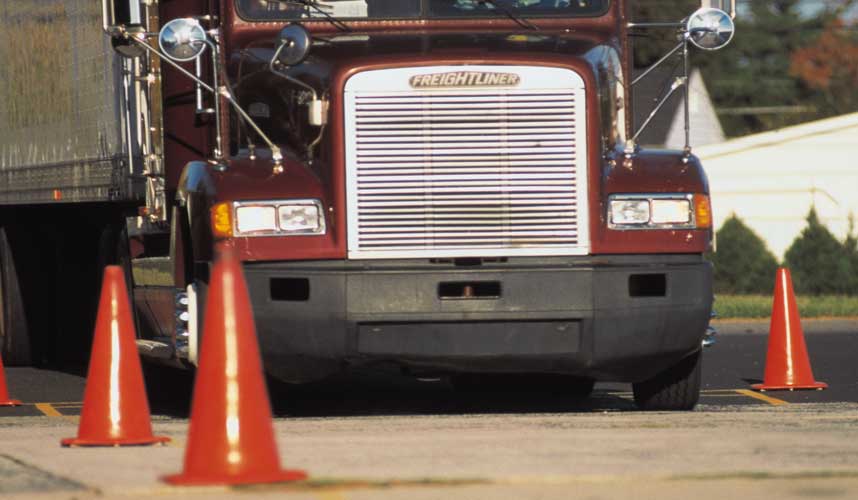
Becoming a truck driver gives you the keys to the open road, but before you can hit the road, you'll need to get a commercial driver's license (CDL). Learn how to get a CDL, the requirements you have to meet, and how to get a job once you earn your CDL.
Know the Federal CDL Eligibility Requirements
When you're getting ready to apply for a CDL, it's important to know that you have to meet both federal and state requirements. The federal requirements are the same for CDL drivers across the nation:
- Be 18 years or older for intrastate trucking
- Be 21 years or older for interstate trucking or for driving a truck with hazardous materials
- Have no criminal offenses on your record disqualifying you from earning a CDL
Determine Your State CDL Requirements
Next, you'll need to know your state's CDL requirements since your state is responsible for issuing your license. These vary but requirements typically include the following:
- Provide proof of identity
- Release your driving record dating back 10 years
- Prove that you meet medical qualifications for a CDL
- Pass a written and skills tests
- Pay a road test fee, which typically costs between $50 and $200
- Complete a professional training course
Keep in mind that you're allowed to hold just one CDL at a time. If you move across state lines or want to work in another state, you'll need to get familiar with the new state's requirements before transferring your CDL to your new location.
Pass Written Tests and Earn a CLP
 Before you start driving a truck professionally, you'll need to earn a commercial learner's permit (CLP). You can do this by passing a written knowledge test for the CDL class of your choice. All states allow you to become licensed in the following classes:
- Class A: Gross vehicle weight rating (GWVR) over 26,000 pounds, with the vehicle being towed in excess of 10,000 pounds.
- Class B: GWVR over 26,000 pounds, with the vehicle being towed not in excess of 10,000 pounds.
- Class C: Commercial vehicle designed to transport 16 or more passengers or hazardous materials.
When you earn your CLP, you'll also have the chance to get special licensing. This adds endorsements to your CDL and gives you license to drive certain kinds of commercial vehicles:
- H: Hazardous Materials
- N: Tank Vehicles
- P: Passenger Vehicles
- S: School Buses
- T: Double and Triple Trailers
Pass CDL Road Skills Test
After you've had your CLP for a minimum of 14 days, you can apply to get out on the road and take the CDL skills test. If you applied for endorsements, you may have to take another road test or two to complete the process.
If you need more practice, be sure to check your state's requirements. Most CLPs are valid for 60 to 180 days, so be sure to complete testing before your CLP expires.
Use Your CDL
Once you've passed the road skills test and met all other state and federal requirements, you can put your CDL to work. Use CDLjobs.com to search hundreds of CDL driver positions with respected trucking companies and find one that's a great fit for you.
Don't forget that you'll need to renew your CDL from time to time, typically every five years. As long as you renew it before it expires, you won't usually need to retake the written or road tests. Instead, you'll just have to pay the renewal fee before getting back on the road again.
Earning a CDL takes focus and skills and may even require you to enroll in professional classes. Once you have this qualification in your back pocket, however, you'll be eligible for CDL driver jobs across your state and ready to launch a lucrative new career.
- Details
- Written by: Kate Williams
 Working as a truck driver can be rewarding and fun career. You get to see different parts of the country while enjoying independence and a nice paycheck. Of course, one potential downside is not seeing your loved ones and spending time at home as often as you would like. Here are some work life balance tips for truck drivers so they can stay positive and successful.
Relax in the Ways That Work for You
You may have five days off at a time or even three weeks (perhaps longer!). These are excellent opportunities to unwind and recharge, but today's technology does not always make that easy. Make it a point to put away the smartphones for an hour or two and connect on a genuine level with your friends and family.
It is also OK to take time for just yourself. Go for a hike, hit the water or lose yourself in a good book. Some truckers even like to volunteer or get involved in their community somehow. For example, distributing food at a homeless shelter keeps some truckers anchored in their community and fosters a greater sense of purpose.
Follow a Schedule for Staying in Touch
It's easy to take technology for granted. You think that loved ones will contact you whenever they have a few minutes or vice versa. Before you know it, several days have passed before you have spoken to your sweetheart or children, and you don't know what is going on in their lives. Many truck drivers set and follow schedules for video chats, phone calls, Facebook/social media and texts. That way, any relationship should not fall through the cracks.
Likewise, plan events with loved ones ahead of time for when you are home. For instance, you can tell your child, "We'll go to the park the day after I get home and throw the baseball around." It gives both of you something to look forward to and reinforces the connection you share.
Set Physical Goals
Trucking is a physically demanding job while also being sedentary. To keep as active as possible, set at least one fitness goal for yourself. If that goes well and you are feeling ambitious, you could set as many as three. These goals must be achievable. Make them practical and realistic, but they can be fun too!
There are plenty of gadgets and smartphone apps that can make fitness fun, or at least trackable. Fitness apps keep count of the number of steps you take, and there are apps for tracking calories and foods consumed. At least five days a week, try to run or weightlift for 30 minutes to an hour. You don’t need a full gym to stay in shape, there are also exercises you can do in your truck.
Give Yourself Food Options
Let's face it—the abundance of fast food restaurants, diners, truck stops and convenience stores don't make it easy to eat lean. Yes, healthy food may be on some menus, but these items are hard to find. Plus, they compete with goodies that tend to be cheaper and more tempting.
The good news is you don't need to give up on food you enjoy eating. However, do make it a point to stock up on healthy foods before you take off on a trip. For instance, you can pack vegetables, fruits, cold cuts and bottled water into your coolers or mini-fridge. Having healthy options on hand means that you are less likely to turn to other types of food when you're bored or desperately hungry.
Experiment with Entertainment
Audiobooks, podcasts and music keep you entertained on the road. Fortunately, there is information on nearly every topic imaginable, and you could learn a new language or start a new hobby. Is there a book that your child or spouse particularly loves? Listen to it, and you have something cool to discuss during a phone call or during the next time you are home.
Above all, go easy on yourself if you feel like you've backslid or aren't doing everything you should be. Rome was not built in a day, and it takes time to develop and stick to different habits. Moreover, these work life balance tips for truck drivers are not set in stone. You may need to experiment for a while before finding the right things that make you tick.

- Details
- Written by: Kate Williams
 As you likely know, self-driving vehicles are becoming increasingly common. Automated trucks have many industry leaders concerned about what the impacts will be on the trucking industry. Although they have not yet made a major splash, self-driving trucks are not just a possibility in the far-off future. They are already a reality. In 2016, a fleet of trucks navigated across Europe. Chances are that self-driving semi trucks will play a big role in the trucking industry in the years to come.
The Benefits
Over the last few years, the trucking industry has struggled with truck driver shortages, cost containment and accidents. Self-driving trucks are likely to alleviate some of these issues, like the reliance on drivers.
The American Trucking Association has predicted that the driver shortage will increase by 175,000 by 2024. That is a huge increase beyond the 48,000-driver shortage reported in 2015. Self-driving trucks can help lessen the shortage and enable trucking companies to run profitably.
Self-driving vehicles are better able to avoid accidents and ease congestion, especially once a large percentage of the vehicles on the road are automated. Most accidents are caused by human error, especially following behind vehicles too closely. Automated vehicles don’t make these types of mistakes. They also don’t get tired and need to stop for sleep.
Another important benefit of automation is that the truck can drive more efficiently, thus reducing emissions. The self-driving technology is also evolving along with electric vehicles, which are also more environmentally friendly.
It will take some time before the technology is fully perfected. However, it is getting very close. Trucks will likely benefit especially because they generally stick to highways and interstates. These roads are generally easier to navigate for self-driving vehicles.
Impact on Truck Drivers
Many fear that self driving semi trucks will put a lot of truck drivers out of work. If a truck could operate completely autonomously, businesses would be able to slash costs for driver pay. As of 2018, there were nearly 2 million heavy and tractor-trailer truck drivers in the United States. If a large portion of those people lost their jobs, it would have a major impact on the economy.
However, the advent of self-driving trucks does not mean an end to the truck-driving profession. Currently, self-driving vehicles need a driver to be present in the case of an emergency. Many require the driver to periodically touch the steering wheel to confirm that he or she is paying attention. Freight that may be unpredicatble and require driver attention, such as the transport of livestock, may not lend itself well to complete driver-less automation.
Most manufacturers are focused on level-three automation. This is sufficient automation to drive without human input but still must have a driver for critical events. Additionally, some roads are not well-suited for automated vehicles and may require the presence of a human driver. Nonetheless, level-three automation reduces driver stress and exhaustion, making everyone safer.
It is likely that the technology will eventually advance to level-four automation, trucks that don’t need drivers. However, for the near term, there is still a need for drivers. This is partially due to regulatory hurdles involving automated vehicles on public roads. Furthermore, the current technology may require additional training. Drivers who get that training may find themselves in higher demand than ever.
Truck Platooning Likely To Increase
Automated trucks can use wireless technology to communicate with each other. This is ideal for platooning. The first truck in the convoy sends data to the following trucks, allowing for more efficient operation. As mentioned above, each of these trucks needs a driver at present. However, they can operate with minimal input, especially when using platooning.
Truck platoons can operate more efficiently. They can also maintain a shared speed and reduce their impact on traffic congestion. The smarter the technology becomes, the more the trucks can optimize themselves for less wear and tear and reduced fuel consumption.
The technology may reach the point at which a driver can man the first vehicle and the remaining trucks run fully autonomously. This would reduce the demand for drivers. However, there is a massive shortage of drivers already, so that will have little impact on employment opportunities.
Self Driving Semi Trucks and the Trucking Industry
There is no question that self-driving vehicles will have a huge impact on the trucking industry. They present new challenges as well as new opportunities.
Truck drivers should avoid panicking over the potential reduction in truck driving jobs. Automation is here to stay and will keep advancing. The better route is to embrace the technology and try to keep up to date with it. Automated trucking will create numerous new jobs and opportunities for those who are willing to help pioneer it. Stay current on the advancements and you may find yourself more in demand than ever before.
- Details
- Written by: Darin Williams
Our goal at CDLjobs.com is to provide trucking companies with qualified, interested driver applicants. We’re not in the business of simply throwing “leads” at Driver Recruiting departments in the name of volume…there are plenty of those sites out there.
One thing we cannot do, however, is hire drivers for your trucking company. That task falls on your Driver Recruiting department. But what happens to those pre-screened driver applicants once they are sent to you matters to us. That’s why we strongly encourage trucking companies to use recruiting software to assist in those efforts. After 20+ years in this industry, there are many driver recruiting software tools that we’ve found to work very well and are worth investigating for your recruiting department.
Hiring is always a tricky business, but it is trickier than normal when it comes to the trucking industry. Turnover and the cost of acquiring new drivers are high. Hiring the wrong driver can be a liability nightmare. Solid driver recruiting software helps you find the right drivers fast, saves you time on labor and time-intensive tasks, creates a better experience for the drivers you are hiring, and helps you measure your actual cost per hire, all while helping you stay on top of security and compliance issues. If you are still on the fence, here are some details.
Major Benefits of Driver Recruiting Software
1. Mobile communication and auto-complete apps
Most trucking company websites have a job application process that is counterintuitive and not optimized for drivers. Good driver recruiting software should enable drivers to complete applications using their phones or other mobile devices. Tenstreet uses an auto-complete feature that enables drivers to complete an application with their phone in minutes. Making the application process as fast and easy as possible without compromising the quality of the information, the result is that over 75% of Tenstreet’s driver application sessions result in completed applications.
2. Save time and labor on driver verifications

Every trucking industry professional knows how cumbersome the verification process can be. This is an important step in vetting drivers, but if it’s not done quickly it can actually cause you to miss out on the best drivers. In many cases, verifications are still required to be sent via fax, because email is not a secure platform for this sensitive information. Carriers can spend many hours faxing, filing, and calling other carriers during this process. Tenstreet has created the Xchange network to relieve the burden, save time, and provide a secure platform for requesting and providing verifications. No more faxing, no more filing cabinets full of paper driver records, no more hours spent calling and faxing other carriers. It’s a no-brainer.
3. Create a better driver onboarding experience
Onboarding and orientation set the tone for an employee’s time at your company and can have a huge impact on a driver’s experience with you. It’s the last step to complete before you send a new driver out onto the road to represent your business and start earning money. Orientation is not only the culmination of all the time and money you’ve spent on recruiting and vetting candidates, it also represents a significant investment in its own right. For these reasons, you should always be looking for ways to improve your orientation and onboarding process. Digital onboarding means that forms completed are all easily legible and verified, and eliminates manually having to track what is submitted or missing. It also allows you to eliminate the expense of having subject matter experts physically present at each orientation, and instead use recording or simulcast presentations. Carriers who have adopted digital onboarding have seen savings of between 25% and 40%.

4. Measure and increase your marketing ROI
This is BY FAR our favorite reason. Do you know the ROI of your recruiting marketing efforts? It’s nearly impossible to measure the return with traditional driver recruiting methods. You place ads, but it’s often difficult to attribute that ad to an application if they don’t immediately complete the application. You could be wasting large amounts of money on advertisement methods that have never actually worked. The Tenstreet software platform automatically tracks leads from multiple sources, and adds them into its drip marketing system. Drip marketing enables you to reach a larger number of candidates and reduces the demand on your recruiters, allowing them to focus on closing warmer leads. Carriers who have used Tenstreet’s drip marketing have seen an increase of three to four times as many full applications submitted from their job board leads.
5. Keep your Driver Recruiting Department Compliant
Hiring safe, reliable drivers is one of the most important priorities for any carrier. In order to make sure that all drivers they hire are safe and qualified, most businesses rely on some combination of employment verifications, MVR’s, DAC employment history, criminal background checks, and PSP’s. These services can be extremely useful in helping you to identify and hire the right drivers; making use of the Pre-Employment Screening Program alone has been proven to help motor carriers reduce crash rates by 8%, and reduce the number of driver out-of-service incidents by 17.2%.Although background checks and employment verifications are invaluable tools, all data handled by them must adhere to strict guidelines set forth by the Privacy Act, the Fair Credit Reporting Act, and other applicable federal laws.
As you can see, the reasons to use any Driver Recruiting Software are warranted and verified. CDLjobs.com is compatible with Tenstreet, as well as a number of other valuable recruiting software systems, because we believe in them and their ability to help trucking companies in the Driver Recruiting process.

- Details
- Written by: Kate Williams
 In an effort to enhance the skills of CDL drivers and improve the overall safety of America’s roadways, the Federal Motor Carrier Safety Administration (FMCSA) has proposed a new set of rules that would change the truck driver training requirements for new or upgraded CDL drivers.
In a nut shell, it would require entry-level drivers to complete a mandatory driving practice program before they can take their CDL skills test. The driving practice program would be provided by a trainer who is registered with the FMCSA’s Training Provider Registry.
Truck Driver Training: What Truckers Need to Know
Rules Would Affect Only Those Getting a New License or Upgrading
If and when the truck driver training rules go into effect, they would apply only to people who are getting their license for the first time, upgrading their license (getting a Hazardous Materials certification, for example) or someone seeking to reinstate their CDL. Anyone who already has a CDL and doesn’t plan to change won’t have to concern themselves with this new truck driver training requirement.
As of Right Now, the Rules Are Proposed, Not Passed
It’s important to highlight that as of right now, the truck driver training rules are merely proposed and have not become an official mandate. While all the signals indicate that this training rule could go into effect, it’s not a law just yet, and even when it does pass, there will be a few years before it is implemented after the passing of the final rule.
In the interim, the FMCSA is allowing public comment on the proposal. Anyone interested may review the potential truck driver training rule and provide their public comment by Wednesday, April 6, 2016.
Assuming it Passes, It Will Be Three Years Until it is in Effect
If and when the training regulations pass, there will be a three-year grace period that will allow schools, states, drivers, and companies to prepare for the changes. The three years would be used to modify information systems and record training provider’s information. It would essentially be a chance to allow drivers, companies, and trainers to adapt to the new rules and determine how the added costs of training will affect the industry.
Truck Driver Training Would Be a “Hybrid” Approach
According to the FMCSA, the new CDL training would combine both behind-the-wheel hours and theoretical study, although there is currently no proposed minimum number of hours that drivers would have to spend on the theory portion. The proposed truck driver training regulations for new Class A drivers include a minimum of 30 hours of behind-the-wheel training with at least 10 hours on a driving range. For Class B, the rules would require 15 hours behind the wheel, with at least 7 hours on public roads.
There will Be Some Truck Driver Training Exemptions
The rules would affect a large portion of the truck driving industry, but there would be a few exemptions. This would include most military drivers, farmers, and firefighters. Other exemptions may include drivers from Alaska, farm-related industries, and more.
What are your thoughts on the Truck Driver Training Proposal?
• Is the amount of training proposed sufficient? Excessive?
• Will the added costs of training be a barrier for new drivers to enter the industry?
• Will trucking companies absorb any portion of the truck driver training costs to keep bodies in seats?
• Will better trained truck drivers save the industry money in the long run?
All of these are crucial factors that need to be worked out before the truck driver training rule can be effectively implemented. Join the discussion on our Facebook and Twitter social media channels (icons found at the top of this page). We want to hear your thoughts!
Accelerate Your Future with a High-Quality CDL Job
Visit CDLjobs.com and we can help you find a trucking job that is the right fit for you and your family. Get in early and avoid the challenges of the potential new rule!
Whether you are looking for a company job or an Owner Operator position, you’ll find plenty of opportunities from leading trucking companies.