
Industry News & Tips for Truckers
- Details
- Written by: Kate Williams

Showers are just as important for truck drivers as they are for everyone else. After hours and even days on the road, you deserve a nice hot shower to wash the grime and the stress away.
Tips for Getting the Most Out of Your Showers While Trucking
Sign up for every truck stop reward program.
Showers at truck stops are expensive. While paying $11 or more for the occasional shower is probably acceptable to you, paying the same amount every time you shower is going to add up to a lot of money—wasted money, since you can often get free showers if you are part of a rewards program. Most major truck stops have rewards programs where you get free showers after a major fuel purchase. You might as well sign up for all of them, because you won’t always have a choice when it’s time to fuel up.
Protect your feet.
Showers, especially public showers, are the perfect breeding ground for biofilms. A biofilm is a collection of microorganisms that clump together. These biofilms often result from bacteria that is washed off of the bodies of shower users. The bacteria accumulates in a biofilm on the surface of the shower. If you have any cracks in your skin, such as dry heels or toes, the bacteria from the biofilm may be able to penetrate your body’s defenses.
The best way to protect your feet is to wear a pair of flip-flops in the shower. Some people will insist that they have showered in public showers with bare feet for years and never had a problem. And maybe they have. Or, they may have caught something they didn’t realize was from the shower. You should ignore these people and wear some foot coverings anyway.
Protect yourself from slips and falls.
One of the problems with public showers is that many are missing mats outside of the shower. Keeping mats clean is a task, which probably explains why some businesses selling showers do not provide mats. If there is no mat to step on after you emerge from the shower, it is extremely important that you watch your step until your feet are dry or you have your shoes back on.
Depending on how old you are, you may already practice some defensive maneuvers when you are on slippery surfaces like public showers. Or, you may have absolute trust in your balance and reactions. Whatever your approach, please remember that it only takes one slip and fall to cause serious damage to your body. Broken bones, ruined joints, back and neck injuries, head injuries and more are possible when you fall from standing to a hard surface.
Don’t always trust the hot/cold directions.
You would expect a business that includes showers in its offerings to ensure the plumbing was connected correctly. Unfortunately, this is not always the case. When you turn on the shower, you obviously need to give it time to heat up. Sometimes it can take several minutes, depending on how far away the hot water heater is. But if you have waited five minutes and the water is still ice cold, try reversing the direction of the temperature control. You may find that the hot water starts where the indication for “Cold” begins.
Be prepared to grab a shower when you can.
For a business so reliant on tight schedules, trucking can be frustratingly unpredictable. You may hook up as soon as possible, or you may sit around twiddling your thumbs for a full day before you can leave with your load. If you are going to get a shower, you need to have everything prepared ahead of time to seize unexpected opportunities. Pack a shower bag that includes everything you think you will need. If a chance pops up, you can grab your bag and go right away.
Know where you can grab a shower.
You are not always going to have access to your favorite truck stop. It can be helpful to know where showers are available in case you need another option. Public showers are often available at:
-
Public swimming pools
-
Campgrounds
-
Gyms (for members)
-
Public beaches
You Can Stay Clean on the Road
It may take some creativity from time to time, but you can stay clean on the road if you try. Please check out our blog for more useful tips for truck drivers. And if you are looking for a job, contact us. We are your source for trucking jobs!

- Details
- Written by: Kate Williams
Trucking is not an easy gig. In fact, it’s incredibly competitive. In 1980, average American truckers made an annual salary equal to over $110,000 by today’s standards—adjusted for inflation. Today’s truckers, meanwhile, make approximately $40,000 per year. Experienced industry operators are working harder. They’re also working longer hours. While innovations have made truck driver jobs less physically challenging to some degree, the trucking world’s most active drivers are still overworked and underpaid.
Competition Among Truckers
So, what’s the deal? Well, the trucking industry has undergone a number of significant changes. Truck driving, once a blue-collar job defined by its many benefits, is different today. The position once held higher wages, higher political clout and a higher rate of compensation. In the 1970s, however, the trucking industry was deregulated.
The Jimmy Carter administration is responsible for the deregulation which increased competition among truckers while lowering compensation. Meanwhile, truckers’ unions began disintegrating alongside a rapidly diminishing union political influence.
Independent Contracting Has Made Things Tough
 The rise of independent contracting, too, has boosted trucker competition. Today’s trucking companies outsource a lot of risks, and costs, of industry operations to truckers themselves—resisting benefit pay standards while advertising positions of freedom, empowerment and flexibility.
Unfortunately, independent contractors regularly find themselves in positions which really aren’t empowering at all. Some lease purchase truck driving jobs—wherein truckers rent their vehicles from companies—may lock drivers into difficult financial situations. Until a lease is paid, the trucker may not be able to switch companies. If they do, they can be charged as much as $65,000. The end result may be little freedom or flexibility until your lease is paid in full.
Thus, it’s not surprising that a competitive atmosphere has thrived around the job. Trucking requires long hours, and a lot of truckers are compensated solely for driving time—rather than hours spent on fuel-filling, paperwork and other administrative tasks.
Competition Takes a Toll
While competition breeds healthy business approaches, it can be difficult to manage when trucking jobs are incredibly isolating. Due to the job’s solitary lifestyle, trucking may be overwhelming for those who’ve just entered this difficult industry. With little human contact, extended stays away from home and low-paying tasks, trucking may be a growing segment which is difficult to handle by the labor force.
A similar segment of independent contactors, Uber drivers, have boosted the competitive atmosphere in their industry. Recently, Uber drivers have been organizing and suing taxi companies over unfair labor practices. Meanwhile, the American Truckers Association has pushed for increasing driver pay, more time at home and overall driver image improvement. Time will tell how Uber activity may begin to blaze a path for positive, competitve changes in trucking.
Private Carriers Might Be the Answer
Fortunately, the trucking industry still has its perks. It has high-paying jobs, if one knows where to look. While the open waters of trucking are highly competitive, some private carriers may offer salaries twice as high as regular, independent, driving positions.
Understandably, drivers flock to such positions. Large trucking companies are making efforts to retain experienced workers and keep them from transitioning to other trucking jobs, as it costs them valuable labor. There’s a chance this backswing may reduce the popularity of independent contracting. There’s also a chance that the push to turn employees into contractors will remain a clever strategy. For the time being, some companies are still saving money with this clever strategy.
At the end of the day, independent drivers should be careful who they sign on with. If a private carrier position opens, they may be faced with a $65,000 penalty to switch. Armed with information, however, a private contractor can easily navigate the competitive world of trucking. Or, even better: They can continue setting their own prices, working with companies of their choosing and navigate the legal challenges of job-switching. A lot of factors impact the trucking industry, but there’s always a way to navigate them.
One thing is for certain, as freight transporation continues to evolve, the industry, and truck drivers in general, will have opportunities to find job security for the forseeable future regardless of competition.

- Details
- Written by: Kate Williams
Sign-on bonuses are found nearly everywhere in the trucking industry, $2,000, $8,000, $10,000…these are some of the most common sizes of sign-on bonuses you will see offered by trucking companies today. Almost every carrier in the US is offering some sort of sign-on bonus to new hires. Yes, it would be wonderful to get that kind of lump sum promised to you before you earn your first paycheck on a trucking job. But are sign-on bonuses all that and a bag of chips or is there something more going on here? Find out why sign-on bonuses are a very real deal and why carriers are expected to continue to offer these in the future.
Why Offer Such a Bonus
 The first questions that most new truckers have regarding sign-on bonuses are:
- Why are trucking companies offering such big bonuses?, and
- What is the hidden agenda behind these bonuses?
Giving new truck drivers just starting out at a company enough money for a down payment on their own big rig sounds fishy. The truth is these sign-on bonuses are legit and truckers do receive this money, but more about that later.
First, the reason why trucking companies offer these bonuses is to attract new drivers plain and simple. It is part of their job recruitment strategy. The trucking industry is in dire straits to find drivers to fill positions, namely due to the age demographics of the existing job pool:
- The median age of truck drivers among private carriers is 52, according to the American Transportation Research Institute.
- Within the next decade, 30 percent of the trucking job pool will be entering their 60s and preparing to retire.
- Currently, 10 percent of truck drivers are 65 and older, which means they are near the age of retirement and likely slowing down with freight hauling.
- Sixteen percent of truckers are within the millennials age 25 to 34.
Here’s the deal. Millennials are the biggest age group of working adults in the world. They have surpassed baby boomers in job numbers, but not in the trucking industry. In fact, all signs indicate that millennials have no intentions of filling the seats left behind by retiring baby boomers.
What does this mean? According to the American Trucking Associations, it means the trucking industry was short 50,000 drivers in 2017; the shortage is expected to increase to 174,000 drivers in the next eight years.
What can trucking companies do to continue hauling freight in the wake of this driver shortage? Provide sign-on bonuses. By the way, trucking is not the first industry to use this approach to increase recruitment numbers. The US military has been offering sign-on bonuses to new recruits for decades, with great response rates.
Stretching Out that Sign-On Bonus
There is one drawback that truck drivers should be aware of with sign-on bonuses. Most of the time a driver will not be able to get a check with their full bonus immediately when they join a company. These bonuses are typically tied to performance goals, such as partial payouts when drivers haul a set number of miles.
The reason for this is simple. If trucking companies paid new truck drivers the full bonus right away, what would keep these drivers from going to other companies offering big bonuses? Nothing, which would defeat the purpose of the sign-on bonuses.
So as a new driver working for a company promising a sign-on bonus, play it smart by reading the fine print. Find out what the payout schedule is so you can stick to it and make sure you receive the full bonus amount.
Finding the Best Sign-On Bonuses
At CDLjobs.com, we work with trucking companies offering the best sign-on bonuses for new hires. Check out our truck driver job listings to see which trucking jobs and bonuses best suit your trucking career goals.
We also have a current listing of all the top trucking companies with a detailed company profile. This gives you the information you need for making a decision about where to apply for your next truck driving position.

- Details
- Written by: Kate Williams
Truck drivers who take drugs are more than just a deadly presence on the roadways. These drivers disrupt the trucking industry by increasing trucking insurance rates and driving up turnover rates. One of the most dangerous drugs currently affecting the United States is opioids. Even more concerning is the fact that Department of Transportation's truck driver drug testing policies did not test for all prescription opioids until recently.
Find out what the latest drug testing regulations are and learn how truck drivers can protect themselves if they are prescribed opioids by a physician.
Are Opioids Illegal for truck Driving?
 Yes and no. Opioids may be prescribed to truck drivers who are in pain due to an injury or accident. In fact, opioids, when prescribed by a physician, are not illegal. Unfortunately, the addictive nature of opioids often leads to dependency, which may drive users to purchase opioids illegally. Continued use beyond the dosage prescribed may be to feel the euphoria or pain reduction of using the drug, but it could also be driven by addiction; individuals who want to avoid withdrawal symptoms.
Why are opioids such a big problem? According to the National Institute on Drug Abuse (NIDA) 90 people in the US die from an opioid overdose every day. From 21 to 29 percent of people who are given opioids by a physician to treat chronic pain will misuse the drug. This includes truck drivers, just like everyone else. Currently, opioid use and abuse is a social epidemic in the US.
Which Opioids are Added to DOT Drug Tests?
The Department of Transportation (DOT) has added several opioids to its truck driver drug testing process. According to the extensively named rule, “Procedures for Transportation Workplace Drug and Alcohol Testing Programs: Addition of Certain Schedule II Drugs to the Department of Transportation's Drug-Testing Panel and Certain Minor Amendments,” the following drugs are now being included in the DOT drug test for truck drivers:
- Hydrocodone, also known as Vicodin, Lorcet, Norco, Zamicet, Verdrocet, and Xodol
- Hydromorphone, known by the name brand of Exalgo ER or Dilaudid
- Oxymorphone, known by the name brand of Opana, Numorphone, or Numorphan
- Oxycodone, also known as Oxycontin, Oxaydo, Roxicodone, and Xtampza ER
Each of these drugs is a prescription medication that is used to treat moderate to severe pain.
Other substances added to the drug screening that are not opioids include:
- Methylenedioxyamphetamine (MDA), which is chemically similar to MDMA aka Ecstasy
This is a final rule recorded in the Federal Register. The ruling went into effect on January 1, 2018, for all commercial truck drivers.
What Happens If You Take These Opioids?
Even if you are prescribed any of these opioids by a medical doctor, you cannot have them in your system when operating a commercial vehicle. Whether you are randomly DOT drug tested or getting an annual DOT drug screen, these opioids had better not be detected in your urine. If you are taking any of these opioids for pain following an injury or surgery, you need to wait until these substances are out of your system before driving a big rig. Here is a breakdown of how long these opioids typically remain detectable in urine after the last dose:
- Hydrocodone—up to four days
- Hydromorphone—up to three days
- Oxymorphone—up to four days
- Oxycodone—up to four days
Keep in mind this is just for urine testing. If you have a hair sample taken for a DOT drug test, opioids may be detectable for 90 days or longer.
What Happens If a Truck Driver Fails a Drug Test?
Failing a DOT drug test can lead to a commercial driver’s license suspension and permanent shutdown. In addition, if you fail a DOT drug test due to an accident or traffic/moving violation, then you are at risk of criminal charges due to being intoxicated.
Opiod abuse is an escalating problem that affects many different sectors of our population. Help is available should you or a loved one be in need and wish to seek treatment for mental health or substance abuse services.
- Details
- Written by: Darin Williams
The list of trucking companies who once proudly employed professional drivers and owner operators to travel America’s highways moving freight has diminished significantly over the years. There is even a Facebook page dedicated to trucking companies from the past titled, Fallen Flags of Old Trucking Companies.
Recessions, acquisitions, poor management, greed, and just plain bad luck have all contributed to the trucking companies who haven’t been able to survive bad markets, tight labor pools, and stiff competition for drivers to fill open trucking jobs.
Fallen Trucking Companies
We thought of five trucking companies that we used to do business with over the course of the last twenty years who are no longer operating in today’s market place. We miss some of them as much as their former drivers, employees, and customers do. Others (you can figure out which ones) aren’t missed at all.
M.S. Carriers
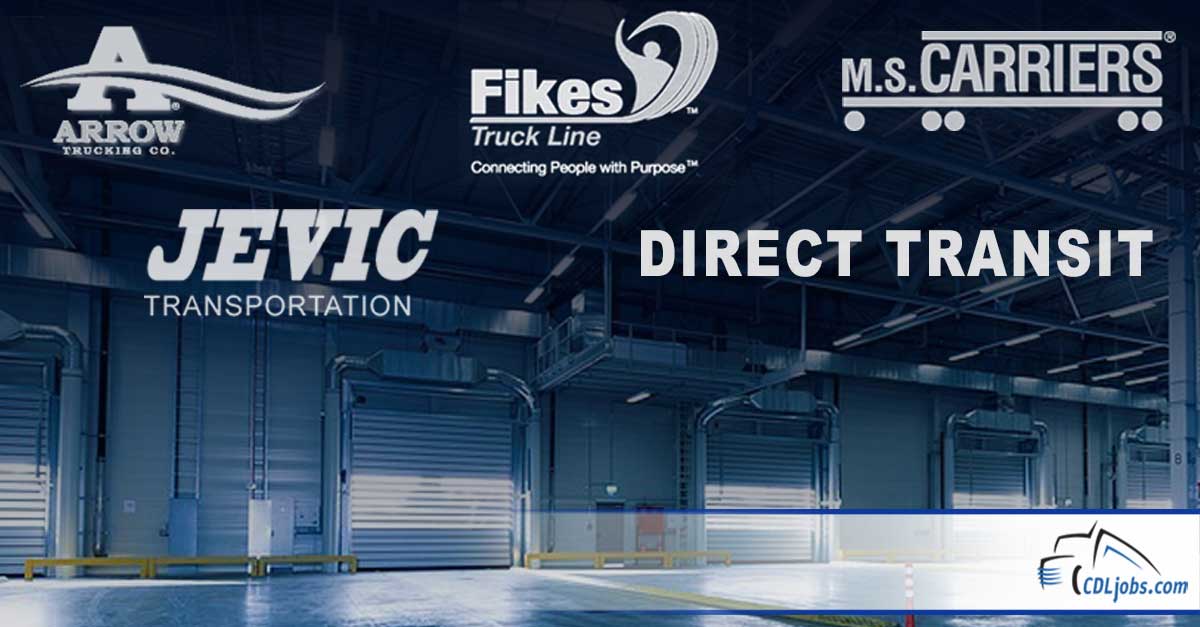
It was maybe the most shocking trucking acquisition that anyone had heard of up to that time when it was announced that Swift Transportation would purchase Memphis, Tennessee, based M.S. Carriers.
In December of 2000, M.S. Carriers CEO Michael Starnes agreed to the purchase and the iconic M.S. Carriers logo was slowly phased out while Swift Transportation traded tractor and trailer equipment until they were finally gone.
Jevic Transportation
It was early in 2008, when Jevic Transportation Inc., citing high fuel and insurance costs, tightening credit markets and economic downturn, decided to discontinue operations.
The news came as a shock to loyal Jevic drivers and customers, many who had been with the company since it was started in 1981.
Fikes Truck Line
It was around the beginning of 2015 when rumors started spreading about the demise of Hope, Arkansas, based Fikes Truck Line. Financial mistakes made a half decade earlier during a very tough market because of an economic recession started to take a toll on the 100% Owner Operator trucking company.
Owner-operators leased to Fikes started calling the Owner-Operator Independent Drivers Association to report bounced payroll checks in late Spring 2015 and an announcement was made in May that Fikes would be permanently closing its doors and ceasing business.
Contractors were encouraged to lease with Blair Logistics, who bought the Fikes home office in Hope, AR, and continued to do business out of it after the company closing.
Direct Transit
This Sioux City-area based trucking company was cruising along registering good growth rates each year until it had grown to a carrier that generated about $140 million in 1995. It was then that DTI agreed to be purchased by Schneider, who later backed out of the deal after not being able to come to final closing terms in December of 1995.
Swift Transportation then stepped in and agreed to purchase DTI, but a list of issues including foreclosure, bankruptcy, and tax evasion charges brought all deals to a halt.
Charles G. Peterson, who was in the process of selling DTI, pleaded guilty to income tax evasion, admitting to pocketing excess money from truck and trailer leases.
The plea agreement was on one of the three counts of tax evasion he was charged with in April 1996. Mr. Peterson's plea said between 1989 and 1990 he diverted at least $750,000 from the leases, evading taxes of between $200,000 and $350,000
Arrow Trucking
December 2009 was when Tulsa, Oklahoma, based Arrow Trucking told their fleet of drivers to park their trucks and walk away, stranding thousands right before Christmas.
Horror stories of stranded drivers were soon replaced with stories of compassion driven from other drivers, companies, and people in general who were stepping in to help the stranded Arrow Trucking drivers. What lead to the immediate layoff is a story right out of a fiction novel.
Doug Pielsticker inherited Arrow Trucking from his father, Jim after the elder was killed in a plane crash in 2001, and promptly concocted schemes to misdirect funds from the trucking company to his personal accounts and affects.
In the end, Pielsticker was indicted on 23 counts of conspiracy, tax evasion and bank fraud.
Trucking Companies that Didn't Make the Long Haul
Some good stories, some not-so-good stories. Some trucking companies are missed, others are not. How you were treated depends a lot on how you remember these once proud giants of the trucking industry.
If you have any others to add to our list of trucking companies that went out of business, let us know. Until then, make it a great day and keep on trucking!

- Details
- Written by: Kate Williams

It's obvious that hurricanes have a major impact on the communities they strike. What some people don't consider is the effects hurricanes also have on the trucking industry. While these massive storms can certainly delay trucks and cause others to reroute, this is also when trucking companies step up to deliver necessary goods before the hurricane and relief donations afterwards. Keep reading to discover how hurricanes affect the trucking industry and what various companies do to help out.
Getting Donations to Victims
If there's one upside to hurricanes, it's that forecasters can usually give people plenty of notice before they strike. In the days before a hurricane strikes, FEMA will hire hundreds of trucks to haul medical supplies, bottled water, tarps, and meals-ready-to-eat (MREs) to areas just outside the predicted disaster area. From there, other truck drivers will deliver these goods to smaller staging stations so people can get the supplies they need as soon as possible after the hurricane.
Working With Other Companies
Trucking companies also work with other businesses to help get necessary supplies out as fast as possible. For example, Werner Enterprises partnered with Home Depot to dispatch 44 trucks loaded with relief aid and supplies to Florida after Hurricane Irma. Home Depot says the company has three hurricane distribution centers in the southern United States that stock merchandise just for disaster relief.
As soon as they're able, Home Depot and other businesses such as Lowe's and Kroger work with trucking companies to move supplies like flashlights, batteries, water, gloves, chainsaws, trash bags, and more to affected areas to help with cleanup and restoration. Retailing giant Walmart, which often contracts with Schneider, sent out 1,060 emergency trucks mostly carrying water to victims of Hurricane Harvey.
Shipping Gas to Florida
When Hurricane Irma forced millions of Floridians to evacuate, gas stations suddenly found themselves low on fuel. In response, the governor of Florida asked the EPA to approve an emergency fuel waiver so more fuel could quickly enter the state. Additionally, the governor rescinded the weight and driver restrictions so that trucking companies could bring in more gas and supplies as quickly as possible.
The governor asked the nearby states of Alabama, Georgia, North Carolina, and South Carolina to waive the same restrictions so trucks could make it through these states quickly as well. Finally, once fuel trucks did arrive in Florida, they were given a state police escort to gas stations in evacuation zones to help residents who needed to leave.
Companies Donating More Than Just Supplies
When Hurricane Harvey hit Houston, trucking company CFI | CDL Truck Driving Jobs was quick to start moving supplies into the area and help people get back on their feet. It sent shipments containing everyday supplies to churches in Houston, which then distributed the supplies to the victims. However, that's not all CFI did to help. It donated nearly $25,000 toward relief funds and said it's ready to offer long-term support if necessary.
Even Small Companies Help Out
It's not just the large trucking companies that feel the impact of hurricanes and want to help. Even small trucking companies do what they can. Sergio Jimenez, owner of NS Trucking in Odessa, Texas, immediately starting collecting donations to help victims of Hurricane Harvey. When an electrical agency called and asked him to transport electrical equipment to communities in Corpus Christi, Victoria, and Houston to help restore power, he decided to "take whatever is needed and take advantage of this trip." He and one of his drivers, Adrian Chavarria, said they would deliver all the donations no matter how many trips it takes.
Although hurricanes can take a major toll on communities, it is often a time in which we see charitable trucking companies step in to help people get the supplies they need, and they do so in force.

- Details
- Written by: Kate Williams

Can something as simple as a video feed change truck driver safety? According to video telematics, an emerging technology used to record and analyze truck and driver behavior, the answer is yes. Collecting the right data about drivers as they operate trucks gives managers and coaches the chance to address problematic behavior and teach drivers best practices, leading to safer roads.
Telematics Tracks Vehicles and Drivers
Video telematics uses a combination of telecommunications and informatics to gather data about trucks. Telematics uses GPS or video to gather this truck movement data, by tracking each truck belonging to a company's fleet. The data from each truck gets sent to the company, which can then track how the vehicle moves, how long it's idle, and any other information about the vehicle and, by extension, the driver.
Telematics also lets the company know the status of all the fleet's vehicles. When a vehicle isn't running, where each vehicle is positioned in the country, and how fast a vehicle is going as it travels down the highway.
Kroger Has Seen Improvements With a Camera
Health monitors are just one way to keep track of drivers. Grocery giant Kroger, in an effort to reduce liability spending, equipped some of their trucks with Lytx cameras to keep track of drivers. The aim was to cut behaviors that caused safety risks and collisions, like texting and driving.
After four months, collisions went down by 50 percent, and smartphone while driving usage went down by 71 percent. Further, Kroger was able to pinpoint exactly who was causing the accidents. It turned out that only a small portion of drivers was causing the biggest problems. Telematics became a way to assess employee performance and safety behaviors. Lytx CEO, Brandon Nixon, says of the cameras, "Video telematics pivoted from being a nice-to-have to a must-have among commercial and public sector fleets."
Productivity Will Increase
Once trucking companies isolate behaviors that are causing collision problems, other benefits abound. Training for driving mistakes will create more adept and productive drivers. The videos show driving behaviors that cause too much wear on trucks, like hitting curbs. So the driver training that will create more productive driving behaviors will also reduce the strain the trucks take when the driver is mishandling them.
Driver Safety Means Truck Safety
One place video telematics falls short is with driver health. A video, like the one the Kroger fleet uses, can see if someone is falling asleep at the wheel. What it can't do is monitor other health markers that might indicate fatigue.
Fatigue is a major cause of automobile collisions, but because monitoring how tired someone feels is nearly impossible, statistics on how sleepy a driver is feeling are hard to come by. A study conducted by the AAA Foundation for Traffic Safety found that about 328,000 crashes per year may result from drowsy driving. Health data for specific drivers could mean the difference between someone staying off the road or someone getting into a truck crash.
Possible Roadblocks
Getting driver health data sounds like a way to make roads safer, but with a possible privacy cost that may run into legal issues. Is tracking someone's body as part of their job performance a breach of privacy? Utilizing a dash cam and sending drivers to additional training to correct driving issues is one matter, but closely monitoring an individual's health may be one step too far. When paired with the possibility of hacking the telematics system, the concept becomes slightly chilling.
Kroger is just one company using video telematics to improve truck safety. As telematics technology emerges, strategies for monitoring drivers will change. Some telematics relates well to the possible future of autonomous trucks, while other standards promise even better information about human drivers and existing truck fleets, in an effort to improve roadway safety for all parties.

- Details
- Written by: Kate Williams

There's no denying it. Driving a truck is one of the loneliest jobs out there, and many times, you're left to your own devices for entertainment and conversation. The thought of bringing your spouse with you on the road may sound nice or it may totally paralyze you with total anxiety!
However, if you are mentally and physically prepared using these tips, a spouse rider program may actually make your trip more enjoyable and give the two of you some quality time to enjoy each other's companionship.
1. Know Before You Go
Before you decide to plan your trip, it's important to check with your employer to see if they have a spouse rider program. If you're fresh out of driving school or new to the company, the answer may be no. Most companies require six months to a year of driving before they allow you to take your spouse or anyone else on the trip.
If spending time with your spouse is of the utmost importance, you may want to, at least at first, find a carrier that allows you time off on weekends. Once you're vested in the company, then you can approach your carrier about their ride program and ask to take your wife on the road.
2. Try Teaming Up
 One of the more lucrative ways that truckers are making extra cash while cutting living expenses is teaming up with their spouse. According to research from CNBC and trucking firms such as Schneider and Swift Transportation, the number of female drivers is growing to meet the demands of the industry. Over the next three to five years, the shortage of truck drivers could rise to as many as 150,000 to 200,000.
Because of this shortfall, many companies are now targeting women by offering excellent benefits such as higher pay and a 401(k) plan. Ellen Vole, the chief executive of the Women in Trucking Association states, "As a truck driver, you make the same amount of money as your male peers, because you either get paid by the mile or the load of the percentage. So gender is not an issue in pay in the truck industry for drivers."
In addition, with team driving, having an extra set of hands is perfect for using the radio to communicate, navigating unfamiliar areas, handling repairs, and delivering goods in a shorter time.
3. Bring Extra Entertainment
Even if your soulmate has always been able to talk to you until the sun comes up, sometimes it's nice to have a break in the conversation.
During these spans, you'll probably need some entertainment for your spouse. Don't leave home without books or an e-reader, games, an MP3 player, or a tablet.. After the break, you'll find your chats more engaging, fun, and personal.
4. Don't Forget the Necessities
If your spouse isn't a driver, make sure that he or she doesn't leave the house without the essentials needed on the road. Most truck stops don't provide any type of toiletries, so if your spouse needs to shave, shower, or just get fresh and clean, you need to bring your own shampoo, soap, and other supplies.
If you forget to bring these items with you, you'll be subject to the steep prices that truck stops tend to charge. With your own stuff, you not only save some cash, but you're presentable and comfortable throughout the trip.
5. Get Out of the Truck
When you're traveling all over the country, don't forget to enjoy the beautiful scenery along the way. Sure, you have another driver or person to make the trip go by faster, but there's so much more to do if you have some extra time allowance in your driving schedule. Many state parks offer places for you to park and enjoy a picnic or take a few pictures. It makes the trip fun and it's the perfect place to document your travels.
Taking your spouse on your trucking route is a wonderful way to keep a happy marriage while enjoying the company of someone you love. Follow these tips, and you're sure to have the time of your life.

- Details
- Written by: Kate Williams
 All truck driving jobs have their own challenges and opportunities. If you are considering dedicated trucking jobs, read on to learn the benefits of these truck driving jobs and whether they may be right for you.
What Is Dedicated Truck Driving?
Many truck drivers handle shipments and deliveries for a variety of companies and along different routes. This is a non-dedicated arrangement because your route details change. In fact, they could be different every day, whether you’re a regional driver or working over-the-road OTR trucking jobs.
Conversely, in a dedicated trucking job, you work the same routes and deliver to the same customers on a regular basis. For example, someone working dedicated trucking in Dallas may pick up a load from a Dallas area warehouse and deliver it to a customer in Lubbock, Texas. Then he or she would take another cargo load from Lubbock back to another customer in Dallas.
Advantages of Dedicated Truck Driving Jobs
Many truck drivers consider dedicated trucking jobs to be the ultimate career goal. It can be, in many ways, a chance to reap the benefits of truck driving with a more predictable lifestyle.
- Predictability: The main difference between dedicated and non-dedicated trucking driving is that the former is more predictable. You drive the same routes every time you get behind the wheel. You don’t have to worry about traveling along unfamiliar roads or finding new places to stop for food, fuel and sleep.
- Customer Relationships: Another benefit of dedicated trucking jobs is that you get to know the customers you work with on a more personal level. You’ll see them more often and have a chance to build real relationships with them. This can make the job more meaningful and enjoyable.
- Regular Schedule: Along with predictable routes comes a regular schedule. You know when you are going to drive and when you will return home. Typically, dedicated truck driving jobs only require you to be on the road a couple of nights a week.
- Family Time: The regular schedule and limited nighttime driving make it easier to make room for family time. One of the most common struggles of truck drivers with families is not being able to spend enough time at home. Moving to dedicated trucking jobs is a great way to overcome this.
- Budget Consistency: Some truck driving jobs can be inconsistent in terms of pay because sometimes there are plenty of high-paying routes and sometimes there aren’t. Dedicated trucking jobs come with a fairly consistent paycheck. This makes budgeting for truck drivers who are saving for home ownership, covering family needs and taking time off significantly easier.
Beyond these advantages, there is also the opportunity for career success. There is plenty of growth on the horizon for dedicated trucking jobs.
Drawbacks of Dedicated Truck Driving Jobs
Dedicated jobs sound pretty great. However, you may be asking: what is dedicated trucking’s catch?
The main challenge of dedicated trucking jobs is that they don’t often offer long-haul experience. Generally, they are only regional routes. Therefore, it can be difficult to switch over to be an OTR driver. Although OTR driving is not for everyone, it does offer some lucrative opportunities and is often the highest-paying trucking jobs.
Additionally, many of the advantages of dedicated trucking can be drawbacks in some people’s eyes. For example, staying closer to home and having a consistent schedule means less freedom. Similarly, there are fewer opportunities to visit and see new places.
Dedicated truck driving jobs also don’t offer many opportunities to pick up extra work. Some truck drivers like this flexibility to help them deal with significant expenses.
Should You Choose Dedicated Truck Driving?
Dedicated trucking can be a great career opportunity, but it isn’t right for everyone. If you want a stable job with consistent hours and pay, it may be a great choice. It is a popular path for people with families they need to support both financially and with their time and love.
However, some drivers want to cover a lot of miles and enjoy the flexibility and freedom of the road. In this case, dedicated trucking may not be the right fit. Similarly, if you want to take home the biggest paycheck possible, dedicated truck driving jobs may not be the right choice.
Dedicated trucking can be a good choice for many people. Consider the pros and cons and determine if it is the right move for you.
Find the Best Trucking Jobs For You
Whether you want to work as a dedicated, over-the-road or any other type of truck driver, you can learn more about the benefits of truck driving jobs here. There are plenty of trucking companies looking for drivers like you, even if you are looking for your first job after training. Find the best jobs for your lifestyle today.
- Details
- Written by: Kate Williams
 If you have served in the U.S. Army, Navy, Marines, Coast Guard, or Reserve, you should seriously consider one of the rewarding trucking jobs for military veterans.
Many trucking companies across the country make it a priority to hire veterans. By doing so, they not only enhance the life of people returning from service, they also strengthen their companies by hiring high-quality individuals with a record of integrity, proven leadership abilities, and an understanding of the vital importance of teamwork, among other skills, .
Why Trucking is a Great Career for Military Veterans
Military veterans have unique skills and attributes that are useful in every possible industry, but these characteristics are especially important for a career as a trucker.
First and foremost, military veterans from every branch have a strong work ethic. Sailors, soldiers, and Marines all know the value of working incredibly hard on a daily basis. As a trucker, you have to be independent and self motivated, and military veterans rarely need prompting or motivation from managers and dispatchers.
They also have a deep appreciation and understanding of teamwork. Military service calls for the highest level of teamwork, with everyone performing their job perfectly. Failure in the military is not accepted, as the team is counting on each and every individual to do their job to achieve their objectives.
For these reasons and more, trucking is one of the best jobs for military veterans. Combining both individual dedication and a respect for teamwork, military veterans are an excellent fit within the trucking industry, and many trucking companies make it a priority to hire these individuals.

Companies with Trucking Jobs for Military Veterans
There are many companies that offer trucking jobs for military veterans, but these are three of the biggest businesses that have a strong reputation for hiring America’s vets. If you are a veteran, there is a good chance that one of these companies has an opportunity waiting for you.
Celadon
Victory Media, the publisher of G.I. Jobs and Military Spouse, named Indianapolis-based Celadon one of the most military-friendly employers in 2017. This honor was based on the company’s efforts to recruit veterans, retention programs for retired and active military, and company policies towards people serving in the National Guard and Reserve. Celadon embraces the experience of its military veterans and thrives as a result of its ability to your match military experience to the civilian job openings they offer.
J.B. Hunt
Ranked as a top military friendly employer for ten consecutive years, J.B. Hunt has a goal of providing 10,000 jobs for military veterans by the year 2020. According to their website, nearly one in five hires at J.B. Hunt is a military veteran, adn currently, over 15 percent of the J.B. Hunt workforce are former military.They also offer a search system for matching specific military duties to their available positions within the company.
Schneider
This trucking company has also been repeatedly ranked among the most military-friendly businesses in the country. They work to convert military experience into excellent pay and benefits, and offer guaranteed home time for drills and annual training. If you’re using your VA benefits to pay for truck driving school, Schneider also offers tuition reimbursement.
Find the Right Trucking Jobs for Military Veterans
Let us help you find a position in the trucking industry. Whether you are retiring soon, awaiting deployment, or need employment after returning from active service, we can help find jobs for military veterans in the trucking industry.
Visit CDLjobs.com today and let us help you start a satisfying career no matter what your military experience.